

GIGMETAR REPORT MAY 2026
A slew of interconnected and interdependent trends and the multitude of both long- and short-term factors associated with these have been affecting Serbian gig workers in global online work markets.
HIGHLIGHTS

Serbian gig workers return to online platforms. The latest measurement indicates a reversal in the trend observed over the previous several reporting periods. Over the past six months, the number of Serbian gig workers on the dominant platform, Upwork, has increased by 4%.

Growth continues alongside further concentration in the Belgrade region. Although Serbian gig workers are active in more than 360 cities, municipalities, and villages, digital work remains highly concentrated in urban areas. Belgrade has further strengthened its dominant position and now accounts for over 42% of all Serbian gig workers.
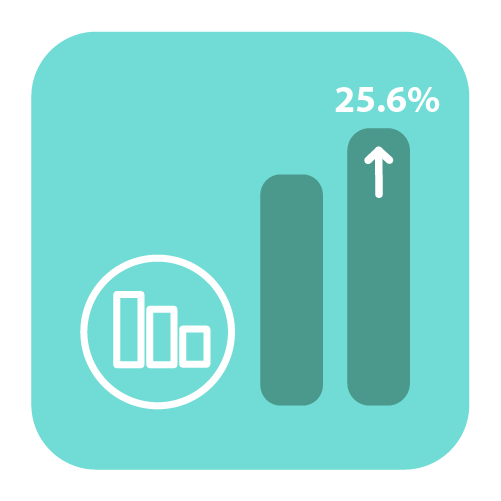
The number of administrative workers increased by one quarter. The most significant change in the digital labor market was recorded in Data entry and administrative support services, where the number of gig workers increased by 25.6%. As a result, this occupational group now represents 15.8% of the entire gig workforce, despite a 4.8% decline in the average hourly rate in this profession.
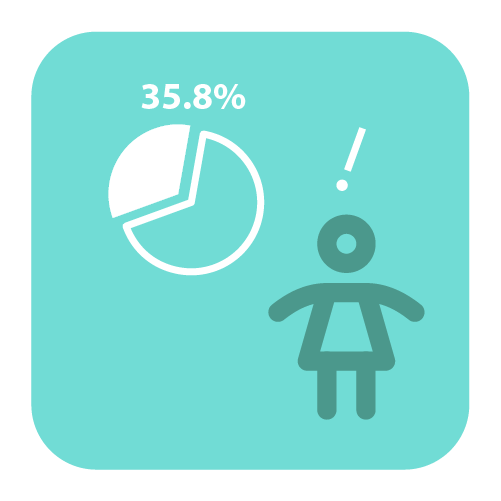
The gender gap narrowed slightly, but women still represent only one third of the gig workforce. The number of female gig workers grew faster than that of male gig workers (5.7% compared with 3.1%), resulting in a modest increase in women’s share of the gig workforce to 35.8%.

The average hourly rate stabilized at nearly USD 24. The average requested hourly rate remained virtually unchanged compared to the previous measurement, increasing by only 0.2% to almost USD 24 per hour. However, substantial differences persist across occupations. Professional services recorded the highest increase in hourly rates (+5.8%) and continue to be the highest-paid occupational category. At the same time, the gender pay gap remains pronounced, with women charging, on average, 81.9% of the hourly rate requested by men.

A “New face” of inequality. In the lowest-paid occupations, male gig workers are now in an even less favorable position than female gig workers. In Data entry and administrative support services, male gig workers request hourly rates that are, on average, almost USD 1 lower than those requested by female gig workers. Combined with the already low pay levels in this occupation, this places male workers in the weakest earnings position across all occupations and both genders.
RESULTS IN DETAILS
Macroeconomic context
Economic activity accelerated during the first half of 2026, with GDP growth reaching 2.8%, up from 2.0% in 2025, exceeding earlier expectations. This stronger economic performance is expected to have a positive impact on the traditional labor market by increasing labor demand. At the same time, it may generate spillover effects on the digital labour market by reducing the supply of workers available for gig work.
Global innovation, technological, and regulatory context
The global slowdown in innovation and declining investment continue to weigh on demand for digital services. Together with the potential economic consequences of the conflict in the Middle East, these developments could affect opportunities for Serbian gig workers. Nevertheless, given the relatively strong economic performance of the major markets driving demand for digital labor, particularly advanced economies, no significant adverse effects on Serbian gig workers are currently expected.
Strong supply amid limited domestic demand
Serbia remains one of the leading countries in the global supply of digital labor. However, domestic demand for gig services remains relatively weak, despite the substantial need among Serbian businesses for the types of services provided by gig workers. As a result, the development of Serbia’s gig economy continues to depend largely on labor demand in the United States and other technologically advanced economies.
AI: An opportunity accompanied by significant risks
The continued advancement of artificial intelligence is expected to increase demand for gig workers with strong digital skills, data literacy, and advanced analytical and creative capabilities. At the same time, remaining competitive in the global digital labor market will require continuous learning, upskilling, and, in many cases, reskilling to adapt to rapidly evolving technological requirements.
Growth in labor supply and platform engagement
Following the contraction observed in the previous reporting period, both the number of Serbian gig workers and their level of engagement on online platforms have increased. This recovery reflects the combined influence of domestic factors—particularly developments in Serbia’s technology sector—and global factors, most notably sustained international demand for digital labor, especially from the United States.
Strong preference for long-term engagements and greater inclusiveness
Preferences for longer-term work arrangements remain high, with 46.2% of Serbian gig workers expressing a preference for long-term engagements. At the same time, the digital labor market continues to provide opportunities for new entrants with relevant skills. Gender-related indicators also continue to improve, both in terms of women’s participation in the gig workforce and the gradual narrowing of gender pay disparities.
Conclusion: What to expect in 2026
Although recent trends are encouraging, the outlook remains subject to considerable uncertainty. Future developments in Serbia’s gig economy will largely depend on global demand for digital labor, economic conditions in key client markets, intensifying international competition—particularly price competition from Asian labor markets—and, critically, the ability of Serbian gig workers to continuously acquire new digital skills and adapt to the rapidly changing demands of the global platform economy.

% OF GIG WORKERS BY ADMINISTRATIVE DISTRICT
Despite the overall increase in the number of gig workers, the regional distribution has remained largely unchanged. As many as 83.6% of Serbian gig workers live and work in urban areas, confirming the continued concentration of digital labor in cities, even though gig workers are present in more than 360 towns, municipalities, and villages across Serbia. Regional developments, however, were heterogeneous. The number of gig workers declined in the Šumadija and Western Serbia region, the number of female gig workers decreased in Southern and Eastern Serbia, while Vojvodina experienced stagnation or a slight decline in its overall gig workforce.Read more ...
Overall trends
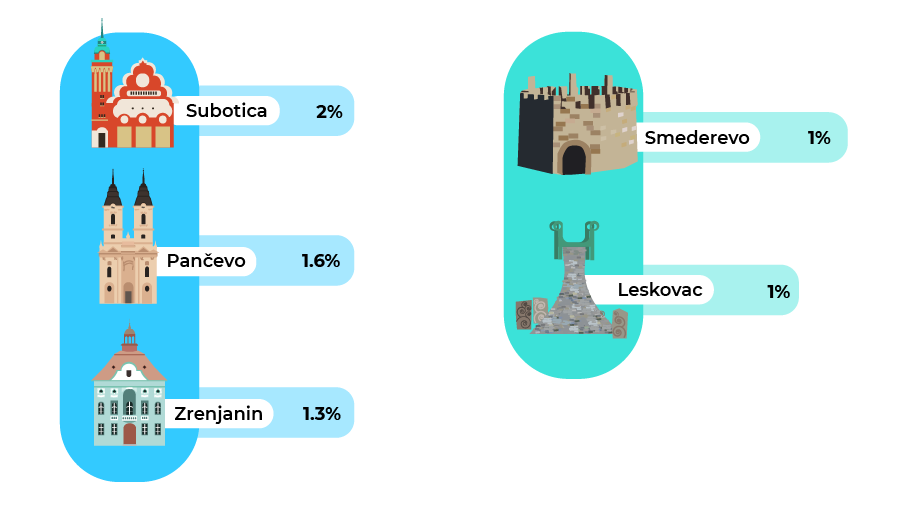
The latest measurement suggests a modest shift in the geographic distribution of gig workers away from the largest urban centers towards smaller cities. Although the number of cities accounting for more than 1% of the national gig workforce declined from 11 to 10, the composition of this group changed. Alongside the major administrative centers, Subotica, Pančevo, Zrenjanin, Kruševac, and Leskovac continue to account for a significant share of Serbia’s gig workforce, while Smederevo entered this group for the first time. At the same time, Čačak and Kraljevo recorded a more pronounced decline, with each city’s share falling to 0.9% of the total gig population.
Concentration in major administrative centers
Data from the administrative centers of Serbia’s NUTS 2 regions further confirm the strong concentration of digital labor in the country’s largest urban areas. Although recent changes have been relatively modest, they reveal an increasingly asymmetric regional pattern.
The latest measurement confirms the continued growth of Belgrade’s dominance. Belgrade now accounts for 42.2% of Serbia’s entire gig workforce, representing an additional increase of 0.5 percentage points compared with the previous reporting period. In contrast, all other major regional centers experienced declines in their respective shares. Novi Sad now accounts for 12.7% of the national gig workforce, Niš for 7.5%, and Kragujevac for only 1.9%.
Urbanization trends
The previous trend towards further urban concentration has slowed in the latest reporting period, although changes remain incremental. The share of Serbian gig workers residing in the country’s 28 largest cities declined by 1.3 percentage points, yet these urban centers still account for 83.6% of the total gig workforce.
Regional differences in workforce dynamics
The regional distribution of Serbia’s gig workforce changed as a result of differing regional growth dynamics. All regions except Šumadija and Western Serbia recorded an increase in the number of gig workers.
The strongest growth was observed in the Belgrade region (+5.8%), followed by Vojvodina (+4.5%). Southern and Eastern Serbia, while considerably smaller in absolute terms, also recorded positive growth of 2.6%. By contrast, Šumadija and Western Serbia was the only region to experience a decline, with the gig workforce contracting by 0.4%.
Regional gender structure
Regional gender dynamics exhibited even greater variation, with no consistent nationwide pattern emerging.
The number of female gig workers declined in two regions: Southern and Eastern Serbia (-2.8%) and, more markedly, Šumadija and Western Serbia (-5.1%). In contrast, Vojvodina experienced a substantial increase in the number of female gig workers (+13.5%), while the Belgrade region also recorded significant growth (+7.1%), particularly given the already large size of its gig workforce.
The dynamics for male gig workers differed considerably. With the exception of Vojvodina, where the male gig workforce remained virtually unchanged (-0.1%), all other regions recorded growth. The largest increase was observed in Southern and Eastern Serbia (+5.1%), followed closely by the Belgrade region (+5.0%), while Šumadija and Western Serbia recorded a more modest increase of 1.7%.
GIG WORKERS BY OCCUPATION
.

Using the Oxford Online Labor Index (OLI) Institute taxonomy, the distribution of Serbian gig workers is presented across six occupational categories: professional services; data entry and administrative support; creative and multimedia services; sales and marketing; software development; and writing and translation.
Occupational trends were mixed during the latest reporting period. Three occupational groups experienced growth, while the remaining three recorded a decline. Moreover, where growth occurred, it was substantially stronger than the contractions observed in declining occupations.
The most notable increase was recorded in data entry and administrative support, where the number of gig workers expanded by 25.6%. This may partly reflect the substitution of administrative staff within technology companies as AI adoption becomes more widespread. By contrast, the largest relative decline occurred in professional services (-3.9%). Given the relatively small number of active gig workers in this occupational category, even modest changes in worker numbers translate into more pronounced percentage fluctuations. Read more ...
Diverging Occupational Trends
The number of gig workers increased in data entry and administrative support, sales and marketing, and creative and multimedia services.
The most pronounced growth occurred in data entry and administrative support, where the workforce expanded by more than one quarter. Sales and marketing also recorded strong growth (+6.8%), while the largest occupational group—creative and multimedia services—grew more modestly (+2.5%). Nevertheless, this represented a meaningful increase in absolute terms, with nearly 100 new workers entering this segment of the market.
By contrast, software development experienced a slight contraction (-0.9%), while more substantial declines were observed in professional services (-3.9%) and writing and translation (-2.7%).
Changes in the Relative Importance of Occupations
These divergent growth patterns also altered the occupational composition of Serbia’s digital labor market.
The exceptionally strong expansion of data entry and administrative support, combined with slower growth—or outright decline—in the remaining occupational categories, significantly increased the relative importance of this occupation. Its share of the total gig workforce rose by 2.7 percentage points, reaching 15.8%.
Moreover, this trend appears to be more structural than temporary. Since the previous reporting period also recorded growth only in this occupational category, the observed changes are likely driven by longer-term rather than short-term factors.
At the same time, this development may increase the vulnerability of Serbia’s digital labor market. As artificial intelligence technologies continue to advance and become more widely adopted, data entry and administrative support is likely to be among the occupations most exposed to technological substitution.
The largest decline in relative importance was recorded in writing and translation, which now accounts for only one in ten Serbian gig workers.
Labor Market Restructuring with Emerging Patterns
A key feature of the latest measurement is the absence of a clear and uniform restructuring pattern across occupations. With the exception of data entry and administrative support and writing and translation, current developments show limited continuity with previous trends.
Over the past year, data entry and administrative support has consistently recorded substantial growth in the number of gig workers. This trend is likely attributable, at least in part, to the growing replacement of traditional administrative roles by AI-enabled work processes within technology companies.
In contrast, writing and translation has experienced not only the largest decline in relative importance during the latest reporting period but has also shown a persistent downward trend across previous measurements. This suggests that the contraction is structural rather than temporary. The findings may indicate that gig workers in this occupation are finding it increasingly difficult to secure work, most likely because writing and translation tasks are among those most directly affected by recent advances in generative artificial intelligence.
REGIONAL GIG WORKERS AS % OF TOTAL, BY OCCUPATION
Although the number of gig workers changed across all regions, the Belgrade region continues to account for by far the largest share of Serbia’s gig workforce, with its relative importance increasing slightly in the latest reporting period. More than 43 out of every 100 Serbian gig workers are based in the Belgrade region. Moreover, Belgrade strengthened its position across all occupational categories, extending the medium-term trend of increasing concentration previously identified.
By contrast, Šumadija and Western Serbia was the region most adversely affected by recent developments in the digital labor market. Its relative share declined across almost all occupational groups, with the sole exception of creative and multimedia services, where its share increased marginally.
Developments in Southern and Eastern Serbia were more balanced. The region increased its relative importance in professional services and software development, maintained its position in creative and multimedia services and sales and marketing, and recorded declines in data entry and administrative support and writing and translation.
Vojvodina experienced relatively modest and balanced changes. However, the occupational structure shifted towards lower-paid occupations requiring comparatively lower levels of skills and expertise. The region strengthened its position in data entry and administrative support and writing and translation, while its relative importance declined or remained unchanged in higher-value occupations.Read more ...
Belgrade further strengthens its dominance
The Belgrade region continues to dominate every segment of Serbia’s digital labor market. This position was further reinforced during the latest reporting period, as almost 60% of the 452 newly recorded gig workers originated from the Belgrade region.
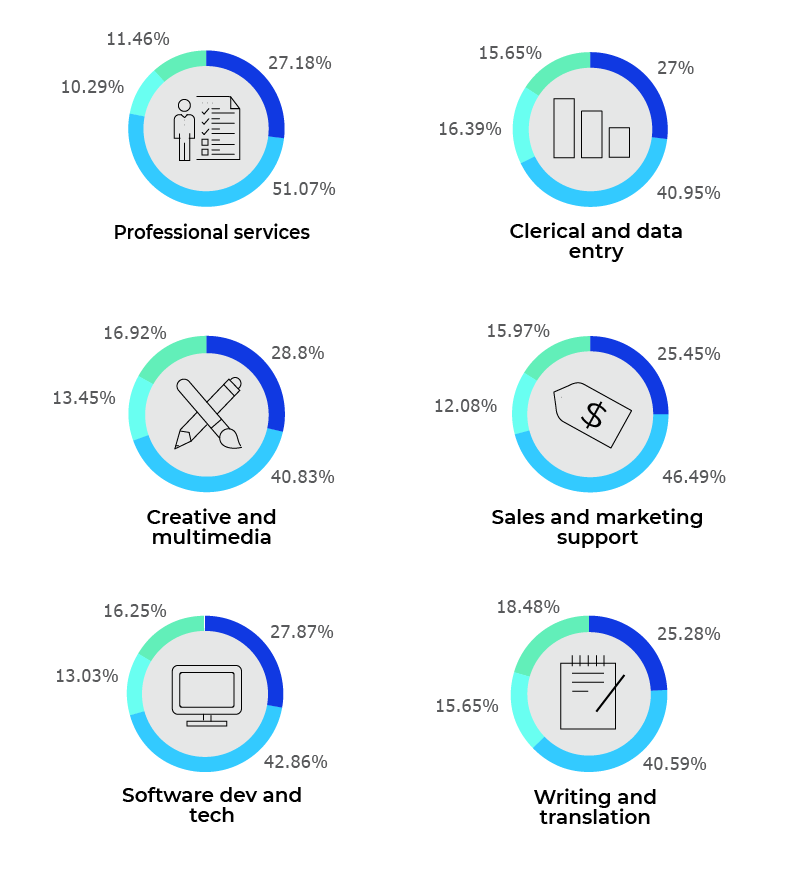
Belgrade’s dominance is particularly pronounced in professional services, where 51.1% of all Serbian gig workers are based in the capital region. In every other occupational category, Belgrade also accounts for more than 40% of the national workforce. Its lowest share is observed in writing and translation (40.6%), yet even this represents a substantial concentration. For comparison, Vojvodina, the second-largest contributor in this occupation, accounts for only 24.2%.
Compared with the previous reporting period, Belgrade increased its relative share across all occupational categories, regardless of whether the occupation itself expanded or contracted. The largest increase (+2.7 percentage points) was recorded in sales and marketing.
Vojvodina
Changes in Vojvodina resulted in modest increases in relative importance in only two occupational categories—data entry and administrative support and writing and translation—while its position in software development remained unchanged.
The largest increase occurred in data entry and administrative support (+1.7 percentage points). Although declines in other occupations were generally small, the largest reduction was recorded in professional services (-0.5 percentage points).
Southern and Eastern Serbia
Southern and Eastern Serbia displayed occupational dynamics that differed noticeably from national trends, resulting in a distinctive regional profile.
Three groups of occupations can be identified.
The first includes professional services and software development. Southern and Eastern Serbia was the only region to record an increase in the number of gig workers employed in professional services. It also strengthened its position in software development, although the increases were relatively modest (+0.9 and +0.6 percentage points, respectively).
The second group comprises creative and multimedia services and sales and marketing, where the region maintained its previous relative position.
The third group consists of data entry and administrative support and writing and translation, where the region’s relative importance declined by 1.5 and 1.8 percentage points, respectively.
Taken together, these developments indicate an improvement in the qualitative structure of the regional digital labor market. Both the absolute and relative numbers of gig workers increased in occupations that generally offer higher earnings and require more advanced skills.
Šumadija and Western Serbia
Šumadija and Western Serbia experienced broadly regressive trends across almost all segments of the digital labor market, with the exception of creative and multimedia services.
This was the only occupational category in which the region strengthened its position, albeit only marginally (+0.4 percentage points). Conversely, the largest decline occurred in sales and marketing, where the region’s relative importance fell by 2.3 percentage points, reflecting a substantial reduction in the number of gig workers in this occupation.

% OF REGIONAL GIG WORKERS BY OCCUPATION
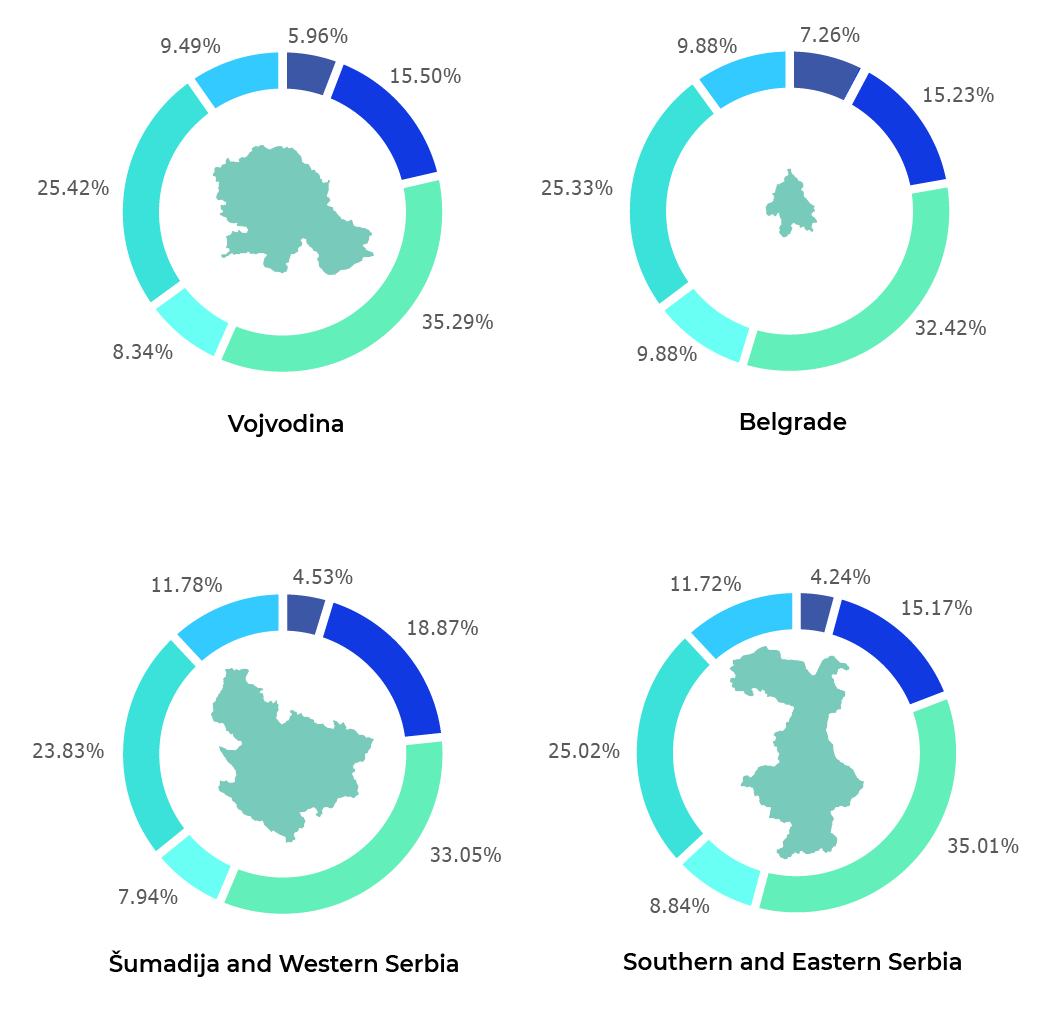
The number of gig workers increased in all Serbian regions except Šumadija and Western Serbia, where the gig workforce contracted slightly (-0.4%). Considerable regional differences nevertheless remained. The Belgrade region (+5.8%) and Vojvodina (+4.5%), Serbia’s two largest regional labor markets, accounted for the largest share of overall growth. Growth was more moderate in Southern and Eastern Serbia (+2.6%).Read more ...
Belgrade region
The supply of digital labor in the Belgrade region increased by 5.8%. Although this contributed to the recovery of Serbia’s digital labor market, it only partially offset the previous contraction, as growth was nearly half the magnitude of the 11.5% decline recorded in the preceding reporting period.
Occupational dynamics varied considerably. Professional services were the only occupation to record a decline, with the number of gig workers falling by 3.5%.
In contrast, data entry and administrative support recorded exceptionally strong growth (+27.5%), while sales and marketing also experienced double-digit growth (+13.3%). Growth in the remaining occupations was considerably more modest, ranging from 2.8% in creative and multimedia services, to 2.4% in writing and translation, and only 0.6% in software development.
Vojvodina
In Vojvodina, the occupational structure of the regional digital labor market shifted primarily towards data entry and administrative support, and, to a lesser extent, sales and marketing.
The most pronounced change occurred in data entry and administrative support, where the number of gig workers increased by 34.1%—the largest occupational increase recorded in any region during the latest reporting period. Combined with developments in other occupations, this raised the occupation’s share of the regional gig workforce by 1.7 percentage points, meaning that 16 out of every 100 gig workers in Vojvodina are now employed in this occupational category.
Apart from the relatively pronounced contraction in professional services (-5.7%), changes in the remaining occupations were comparatively modest.
Southern and Eastern Serbia
Developments in Southern and Eastern Serbia reflected a combination of national trends and region-specific dynamics.
As elsewhere, data entry and administrative support recorded substantial growth (+14.1%), while sales and marketing also expanded significantly (+7.1%), increasing the relative importance of both occupations within the regional labor market.
The region’s distinguishing feature, however, was the sharp decline in writing and translation, where the number of gig workers fell by 11.4%. This represents the largest occupational contraction recorded across all regions during the latest reporting period.
The remaining three occupational categories recorded moderate growth averaging approximately 2.9.
Šumadija and Western Serbia
As Serbia’s smallest region in terms of gig workforce, Šumadija and Western Serbia experienced predominantly negative labor market developments.
Not only did the overall gig workforce decline slightly (-0.4%), but four of the six occupational categories also recorded contractions of broadly similar magnitude.
The largest declines occurred in sales and marketing (-10.3%), writing and translation (-10.1%), software development (-9.4%), and professional services (-8.5%).
The two occupations that recorded growth displayed markedly different dynamics. While the number of gig workers in data entry and administrative support increased by more than 20%, growth in creative and multimedia services was much more modest, amounting to 4.9%.

GIG WORKERS BY GENDER
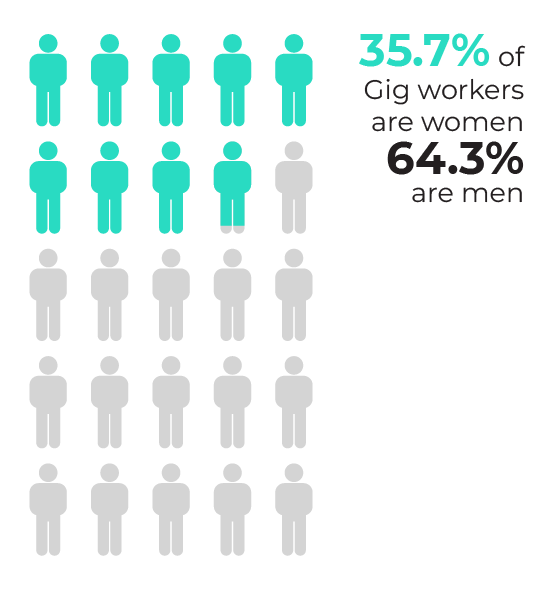
Although the number of female gig workers increased considerably faster than that of male gig workers (5.7% compared with 3.1%), this growth resulted in only a modest improvement in gender balance within Serbia’s digital labor market. Nevertheless, the positive trend observed in the previous reporting period continued. Compared with many countries worldwide, Serbia continues to exhibit a moderately balanced gender composition of its gig workforce. At the same time, women’s participation remains well below both the global average of nearly 40% and the participation rates typically observed in Serbia’s traditional labor market.Read more ...
Growth Without Major Structural Change
The number of female gig workers increased at a substantially faster rate than the number of male gig workers (5.7% versus 3.1%). However, this difference translated into only modest changes in the overall gender structure of Serbia’s digital labor market.
Women now account for 35.8% of Serbia’s gig workforce, representing an increase of 0.6 percentage points compared with the previous reporting period. Although relatively small, this continues the positive trend identified in the previous measurement, when women’s share increased by more than 2 percentage points.
From an international perspective, Serbia can be characterized as having a moderately gender-balanced digital labor market among countries with comparable or lower levels of economic development. Women’s participation in Serbia’s gig economy is substantially higher than in countries such as Ukraine and Mexico, but remains well below the levels observed in countries such as Argentina (65%) and South Africa (51%).
% OF GIG WORKERS BY GENDER AND OCCUPATION
Differences in occupational dynamics between women and men, together with varying growth rates within individual occupations, resulted in a slightly more balanced gender composition of Serbia’s digital labor market compared with the previous reporting period.
Female gig workers continue to be more strongly represented in data entry and administrative support and writing and translation, while male gig workers have become the majority in professional services. Nevertheless, gender differences are generally moderate across occupations. The most pronounced female overrepresentation remains in data entry and administrative support, where the number of women exceeds that of men by 15.9%. Read more ...
Gender differences across occupations
Although both the male and female gig workforce expanded overall, changes in the occupational structure were more nuanced.
The same directional trends for both genders were observed in data entry and administrative support, creative and multimedia services, sales and marketing, and writing and translation. However, writing and translation was the only occupation in which both men and women recorded a decline.
The remaining two occupations displayed divergent gender dynamics. In software development, the number of female gig workers increased, while the number of male gig workers declined. Conversely, professional services recorded a substantial decline in the number of women (-10.1%) alongside a modest increase in the number of men (+3.5%).
Despite these changes, male gig workers continue to dominate the occupations in which they have traditionally been the majority. This is particularly evident in software development, where the number of men remains 6.9 times greater than the number of women. Men also substantially outnumber women in creative and multimedia services (+86.9%) and sales and marketing (+28.2%).
Professional services remains the only occupational category where the gender balance has fluctuated noticeably across reporting periods. Following the latest changes, men now outnumber women by 3.9% in this occupation.
Common gender trends
In four of the six occupational categories, both men and women experienced changes in the same direction.
Employment increased for both genders in data entry and administrative support, creative and multimedia services, and sales and marketing. The strongest gender difference was observed in sales and marketing, where the number of female gig workers grew by 14.5%, compared with 2.6% for men.
In the remaining two expanding occupations, growth rates were more similar. In data entry and administrative support, the number of male gig workers increased by 25.8%, compared with 25.4% among women. In creative and multimedia services, the male workforce grew by 3.5%, while the number of women increased by 1.3%.
The only occupation in which both genders experienced contraction was writing and translation. Here, the decline was slightly more pronounced among women (-2.9%) than among men (-2.6%).
Divergent occupational dynamics
The remaining two occupational categories—software development and professional services—displayed opposite trends for men and women.
In software development, the number of female gig workers increased by 3.3%, while the male workforce declined by 1.5%. Although noteworthy, these changes have only limited practical significance because the occupation continues to be overwhelmingly male-dominated.
The opposite pattern emerged in professional services. The number of female gig workers declined sharply (-10.1%), while the male workforce increased by 3.5%. As a result, men became the majority in an occupation where gender representation had previously been more balanced.
Differences in occupational structure by gender
The occupational composition of the gig workforce differs substantially between men and women, both in terms of occupational concentration and the relative importance of individual occupations.
The occupational profile of male gig workers is considerably more concentrated. Nearly 70% of all male gig workers are employed in just two occupations—creative and multimedia services and software development.
Among female gig workers, occupational concentration is lower. The two largest occupations—creative and multimedia services and data entry and administrative support—account for just under 55% of the female gig workforce.
Moreover, the remaining occupations are distributed relatively evenly among women, with individual occupational shares ranging from 9.1% in software development to 16.5% in writing and translation.
By comparison, among men the remaining occupations beyond the two dominant categories each represent relatively small shares of employment, ranging from 4.8% in professional services to 9.4% in data entry and administrative support.
TOTAL INCOME BY GENDER

The cumulative earnings of Serbian gig workers who were active during the latest reporting period exceeded USD 160 million, representing an increase of more than 6.5% compared with the previous measurement.
Despite the faster growth in the number of female gig workers, women accounted for only 23% of total cumulative earnings, a slight decline from the previous reporting period and still well below their 35.8% share of the overall gig workforce.
The average cumulative earnings of female gig workers amounted to USD 11,946, compared with USD 22,277 for male gig workers. This substantial difference points to persistent gender inequalities in income within Serbia’s digital labor market.
These disparities are likely driven by several mutually reinforcing factors, including lower average hourly rates among women, the concentration of male gig workers in higher-paying occupations, and differences in work intensity. The findings also suggest that women may be more likely to engage in platform work on a part-time or occasional basis, whereas men are more likely to rely on gig work as a primary career choice.Read more ...
Factors influencing aggregate earnings
The observed gender gap in cumulative earnings reflects the combined effects of several structural factors.
First, the significantly larger number of male gig workers increases the overall earnings gap and amplifies the effects of labor market sorting. Second, men are more heavily concentrated in occupations that typically command higher pay. Third, male gig workers also earn higher average hourly rates than their female counterparts.
In addition, women appear more likely to participate in platform work on a part-time or occasional basis, which further reduces cumulative annual earnings relative to men.
The only factor working in the opposite direction is labor market participation among active workers. At the time of measurement, a slightly higher proportion of female gig workers (35.3%) were actively engaged in paid work compared with men. Although this partially offsets the overall earnings gap, its effect is relatively modest in comparison with the combined influence of the other structural factors.
HOURLY RATES, IN US$, BY GENDER AND OCCUPATION
Following the decline recorded in the previous reporting period, the latest measurement indicates a period of relative stability in hourly rates, with the average requested hourly rate increasing by only 0.2% to USD 23.9 per hour.
Beneath this overall stability, however, occupational trends diverged considerably. The largest decline was recorded in data entry and administrative support (-4.8%), while professional services experienced the strongest increase (+5.8%).Read more ...
Stability in average hourly rates
After many years of sustained growth, interrupted by the decline observed in the previous reporting period, hourly rates remained broadly unchanged during the latest measurement, increasing by only 0.2% on average.
This stagnation likely reflects heightened uncertainty in the global political, economic, regulatory, and technological environment, together with the relatively high pricing of Serbian gig workers compared with workers from major global supplier countries such as India and Pakistan.
With an average requested hourly rate of USD 23.9, Serbian gig workers continue to charge slightly more than the average for Central and Eastern Europe (USD 23.0), although they remain 13.1% below the average hourly rate of gig workers in Western Europe (USD 27.0).
Substantial differences persist across occupations. Data entry and administrative support remains the lowest-paid occupation, where the average requested hourly rate represents only 41.3% of the rate charged by workers in the highest-paid occupation—professional services.
The highest average hourly rates continue to be recorded in professional services (USD 30.1 per hour) and software development (USD 29.2 per hour).
Diverging occupational trends
One of the defining characteristics of the latest reporting period is the absence of a uniform pattern across occupations.
While average hourly rates remained stable overall, occupational trends moved in different directions.
The sharpest decline occurred in data entry and administrative support, where the average requested hourly rate fell by 4.8% (approximately USD 0.62 per hour). A marginal decline (-0.2%) was also observed in writing and translation, although its practical effect on earnings was limited.
All remaining occupations recorded increases in hourly rates, albeit at different rates.
The strongest growth occurred in professional services (+5.8%), corresponding to an increase of approximately USD 1.7 per hour. Together with the more modest increase in software development (+2.1%), this further strengthened the position of these occupations as the highest-paying segments of Serbia’s digital labor market.
Hourly rates also increased in creative and multimedia services (+2.2%) and sales and marketing (+1.1%), broadly continuing the long-term trends observed in previous reporting periods.
Gender differences across occupations
Gender-specific wage dynamics varied considerably across occupations.
In most occupations, men and women experienced changes in the same direction.
Hourly rates increased for both genders in professional services, creative and multimedia services, and software development.
In professional services, hourly rates increased somewhat faster among men (+6.1%) than among women (+5.5%). By contrast, women experienced stronger growth in creative and multimedia services (+3.5% versus +1.6% for men) and especially in software development, where women’s requested hourly rates increased by 6.3%, compared with 2.1% among men.
Both genders experienced declining hourly rates in data entry and administrative support, although the decline was more pronounced among men (-5.6%) than among women (-4.1%).
Narrowing and widening gender pay gaps
Male gig workers continue to command higher hourly rates than women in most—but not all—occupations.
One of the most noteworthy findings of the latest measurement is that men now earn less than women in the lowest-paid occupation. In data entry and administrative support, male gig workers request hourly rates that are almost USD 1 lower than those requested by female gig workers. Combined with the already low earnings associated with this occupation, this places men in the weakest earnings position across all occupations and both genders.
In writing and translation, gender differences are negligible, suggesting an almost gender-neutral pay structure.
In occupations where men continue to earn more, the size of the gender pay gap varies considerably.
The differences are relatively modest in professional services, where men’s hourly rates exceed women’s by only 0.8%, and in creative and multimedia services, where the gap amounts to 4.8%.
By contrast, the largest gender gaps are observed in sales and marketing, where men charge 27% higher hourly rates than women, and in software development, where the difference reaches 34.9%.
Earning potential
The combination of differing occupational trends and varying rates of change resulted in a slight narrowing of the overall gender pay gap.
Female gig workers now request, on average, 81.9% of the hourly rate charged by men, compared with 81.6% in the previous reporting period.
Assuming full-time engagement (176 working hours per month), the lowest potential monthly earnings are observed in data entry and administrative support, where workers could earn approximately USD 2,258 gross (USD 1,717 net).
At the opposite end of the earnings distribution, professional services offer the highest earning potential, reaching approximately USD 5,466 gross (USD 4,163 net) per month under the same assumption.
Changes in hourly rates also translated into meaningful differences in potential monthly earnings.
Among male gig workers, the largest gains were recorded in professional services, where full-time workers could earn approximately USD 305 more per month (gross) than six months earlier. Conversely, male workers in data entry and administrative support experienced the largest decline, with potential monthly earnings decreasing by approximately USD 125 (gross).
Among female gig workers, earnings prospects improved substantially in professional services, sales and marketing, and software development, where increases in hourly rates translated into more than USD 200 in additional potential monthly gross earnings compared with the previous reporting period.
_____________________________________________________
Recommended citation: Anđelković, B., Jakobi, T., Ivanović, V., Kalinić, Z. & Radonjić, Lj. (2026a). Gigmetar Serbia, May 2026, Re:People – Centre for society and technology, http://gigmetar.repeople.rs/en/serbia-2026-1/.
PREVIOUS REPORTS













HOW GIGMETAR WORKS
GigmetarTM is the first instrument that describes the geography of digital work in Serbia and the region in terms of gender, income, and most common occupations. It is a result of the efforts made by RE:PEOPLE (former Public Policy Research Centre) to shed more light on the work on online platforms.

ABOUT US
Re:People – Centre for society and technology is a team of innovative researchers and digital enthusiasts investigating the future of work and development of the digital economy in Serbia and South-East Europe.
Contact: gigmetar@repeople.rs