

GIG WORKERS IN THE REGION
The latest regional edition of Gigmetar marks a turning point in labour market activity across the leading global online work platforms. Following several consecutive reporting periods characterised by declining numbers of active workers, the regional digital labour market recorded a broad-based recovery, with all countries experiencing an increase in the number of gig workers alongside rising average requested hourly rates.Read more ...
These developments have taken place against a backdrop of heightened global uncertainty, shaped by the conflict in the Middle East, regulatory changes, and continuing tensions between the United States and other major economies. According to the International Monetary Fund (IMF), global economic growth is expected to slow to 3.1%, while higher energy prices continue to fuel inflationary pressures, particularly in less developed economies. In Southeast Europe, and especially across the Western Balkans, economic growth is projected to remain below the global average at approximately 2.8%, while inflation continues to pose a significant challenge.
At the same time, broader technological developments—particularly the increasing substitution of labour through the adoption of artificial intelligence—may also be encouraging a growing number of workers to seek opportunities on global digital labour platforms. From the demand side, the United States remains the dominant source of online work, demonstrating remarkable resilience despite global uncertainty. Although these developments continue to support the expansion of the gig economy, the exceptionally high level of investment in artificial intelligence may, in the longer term, limit job creation if technological advances substitute rather than complement human labour.
HIGHLIGHTS

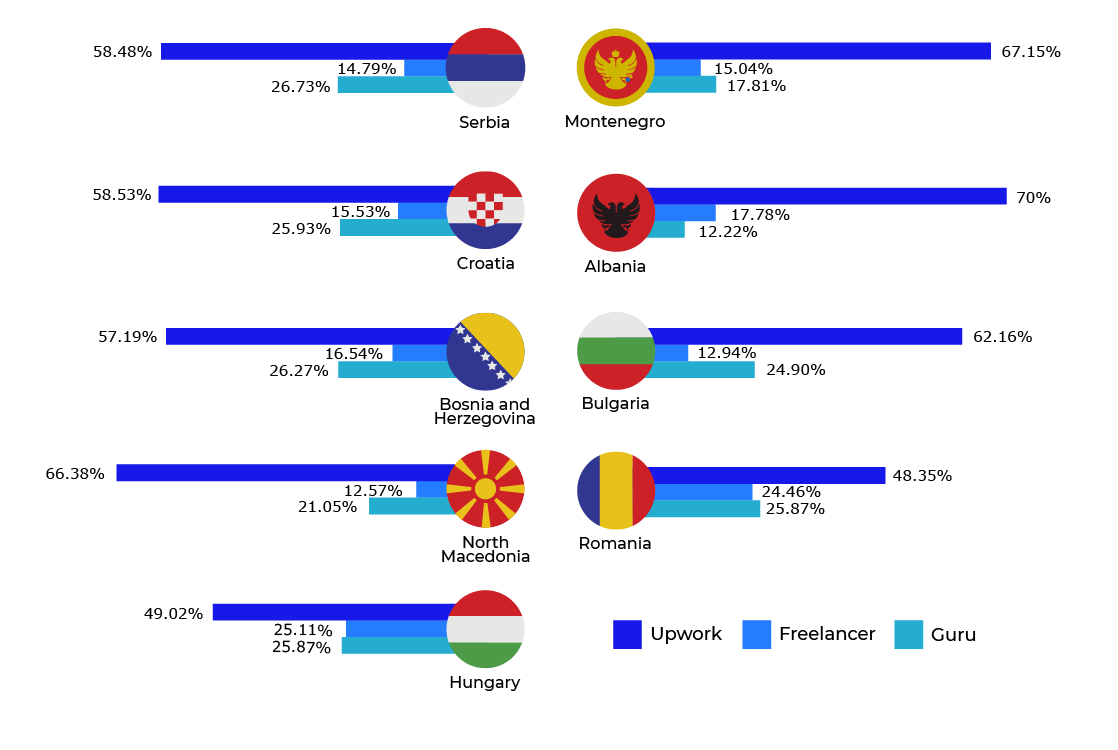
Upwork strengthens its market leadership amid platform restructuring. The latest measurement indicates continued growth in the regional gig workforce, accompanied by a pronounced redistribution across major digital labour platforms. Upwork increased its market share to 57.3%, further consolidating its position as the dominant platform in all observed countries. Guru recorded a slight increase in market share, while Freelancer experienced a substantial contraction of 19.1%.

The regional growth pattern has shifted. EU Member States experienced a stronger inflow of new gig workers than non-EU countries, increasing their share of the regional gig workforce to 51.9%. This suggests that the centre of gravity of the regional digital labour market is gradually shifting towards EU economies.

Administrative occupations drive the expansion of the gig economy. The strongest employment growth was recorded in Data Entry and Administrative Services, where the number of gig workers increased by more than 33%. Together with Sales and Marketing, where the workforce expanded by almost one-fifth, these two occupational groups accounted for 48.4% of all new gig workers entering the regional digital labour market.

A smaller share of workers was actively engaged at the time of measurement. Despite the increase in the overall number of gig workers, the proportion of workers actively engaged on projects declined to 28.4%, representing a decrease of 6.5 percentage points compared with the previous measurement. Serbia and North Macedonia remained the countries with the highest levels of worker engagement, with approximately 37% of gig workers actively working at the time of observation.

Hourly rates continue to increase, although unevenly across countries. The growth of requested hourly rates accelerated to 4.4%, albeit with considerable regional variation. Albania recorded an exceptional increase of 18.3%, representing the largest six-month increase in requested hourly rates observed in any country since Gigmetar monitoring began.
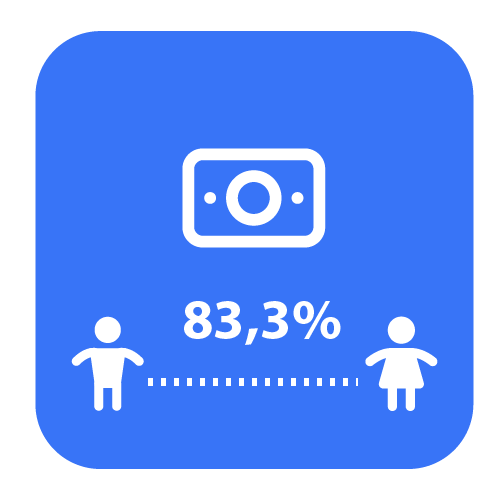
The gender earnings gap continues to narrow, although substantial cross-country differences remain. Requested hourly rates [1] for female gig workers increased more rapidly than those of their male counterparts (6.1% compared with 3.6%), raising women’s average requested hourly rate to 83.3% of that requested by men. Nevertheless, significant disparities persist across countries. Albania remains the most gender-equal labour market, with women requesting 92.3% of men’s average hourly rate, while Croatia and Hungary continue to exhibit the largest gender gaps, with female gig workers requesting, on average, only three-quarters of the hourly rates requested by men.
[1] ‘Hourly rates’, indicating the asking price of labour posted by gig workers on their online accounts, is used in Gigmetar interchangeably with ‘earnings’.
LEADING PLATFORMS
The latest measurement marks a reversal in the dynamics of the three leading online labour platforms over the past two years. The overall regional gig workforce expanded by 3.1%, although this growth was distributed unevenly across platforms.
While Freelancer experienced a substantial decline of 19.1%, and Guru recorded only marginal growth of 0.4%, the number of workers on Upwork increased by an impressive 14.2%. Consequently, the overall expansion of the regional gig workforce was driven almost entirely by Upwork, whose strong growth more than compensated for the contraction on Freelancer and the stagnation observed on Guru. Read more ...
Although both Upwork and Guru recorded increases in labour supply, the magnitude of growth differed considerably. Upwork experienced particularly strong expansion, with the number of workers increasing by 14.2%. This not only offset the modest decline (3%) recorded in the previous measurement but also partially recovered from the nearly 20% contraction observed one year earlier. Guru continued its gradual expansion, although at a very modest pace of 0.4%. By contrast, Freelancer lost almost one-fifth (19.1%) of its workforce. This contraction not only reversed the positive trend observed in the previous reporting period but completely eliminated the substantial 17.5% increase recorded six months earlier.
The resulting changes further strengthened Upwork’s market position. Its share of the regional market increased to 57.3%, representing a gain of 5.4 percentage points compared with the previous measurement. Guru also modestly expanded its market share, surpassing 25%, while Freelancer’s contraction reduced its market presence to its lowest level among the three major platforms. Today, only around one in every eighteen gig workers in the region is active through Freelancer.
Methodological considerations Several factors should be taken into account when interpreting these estimates. First, digital platforms periodically modify the way worker profiles are displayed or counted, while the methodological details of these changes remain unavailable to researchers. This inevitably affects the comparability of findings across reporting periods. Second, some workers maintain profiles on multiple platforms (multi-homing). However, this limitation is unlikely to materially affect our estimates, as platforms have a strong commercial incentive to display only workers who are genuinely available to prospective clients and therefore regularly update their databases. Moreover, workers active on multiple platforms remain part of the effective labour supply, meaning that multi-homing does not substantially distort estimates of the workforce actually available on regional digital labour markets.
SHARE OF GIG WORKERS BY COUNTRY AS % OF REGIONAL TOTAL
The past six months have been characterised by divergent developments across the three dominant online labour platforms in Southeast Europe. The principal beneficiaries of these changes were the EU Member States, whose combined share of the regional gig workforce increased by 1.1 percentage points, while the relative importance of non-EU countries declined by the same margin, with the exception of Montenegro.
Despite these shifts, the regional digital labour market remains remarkably balanced. Non-EU countries account for 48.1% of the regional gig workforce, although they represent only 28.2% of the total population of the countries covered by Gigmetar. This finding highlights the comparatively greater importance of digital platform work in the non-EU part of the region. Read more ...
Growth on Guru – modest but universal. The number of gig workers on Guru increased in every country in the region, although growth remained modest throughout. It ranged from only 0.2% in North Macedonia to 0.9% in Montenegro.
Upwork – strong growth with substantial national differences. Unlike Guru’s relatively uniform expansion, developments on Upwork varied considerably across countries. The strongest growth was recorded in Bulgaria, where the gig workforce expanded by more than 25%, followed closely by Romania, where it increased by almost one-quarter. Strong double-digit growth was also observed in Croatia, Montenegro, and Hungary. The remaining countries also recorded positive growth, although at single-digit rates. The smallest increase occurred in North Macedonia, where the number of Upwork workers grew by 6.3%.
Freelancer – decline across the entire region. In contrast to developments on Upwork and Guru, every country experienced a decline in the number of workers on Freelancer. The largest contractions were recorded in: Bulgaria (-27.3%), Serbia (-22.6%), Bosnia and Herzegovina (-20.7%), In the remaining countries, the decline ranged between 10% and 18%, with Montenegro recording the smallest contraction (9.7%), although this still represents a substantial reduction.
Changes extend beyond platform substitution. The observed developments cannot be explained simply as workers migrating from one platform to another. If the changes reflected only a redistribution among platforms, inflows and outflows would have been broadly symmetrical across countries. Instead, the fact that growth rates differed substantially between platforms within the same countries suggests that broader economic and structural forces were also at work. At the same time, the direction of change was remarkably consistent across the region: Upwork and Guru expanded everywhere, while Freelancer contracted in every observed country. This points to the combined influence of global market forces and platform-specific dynamics, which together contributed to the expansion of the Southeast European gig workforce to 91,657 workers. National factors primarily influenced the magnitude of these changes rather than their direction.
A highly asymmetric regional distribution. Recent developments have further strengthened Romania’s position as the largest source of gig workers in Southeast Europe. More than one-quarter (25.7%) of all regional gig workers are now located in Romania. Together, Romania (25.7%) and Serbia (22.4%) account for almost half of the entire regional gig workforce. The remaining countries hold considerably smaller shares, ranging from 11.4% in Bulgaria to only 2% in Montenegro.
NUMBER OF GIG WORKERS PER 100,000 POPULATION, BY COUNTRY
When differences in national population size are taken into account, all countries recorded positive growth in the relative size of their gig workforce. However, the intensity of this growth varied considerably.
The largest increases in the number of gig workers per 100,000 inhabitants were observed in Bulgaria and Romania, while the two countries with the largest existing gig populations – North Macedonia and Serbia – recorded the slowest relative growth, averaging approximately 7%.Read more ...
Three distinct groups of countries. Measured by the number of gig workers per 100,000 inhabitants, the countries of Southeast Europe can be divided into three broad groups. The first group consists of countries with fewer than 100 gig workers per 100,000 inhabitants: Hungary, Romania, Bulgaria, Croatia. Although all four are EU Member States, substantial differences remain within this group. Hungary continues to record by far the lowest level of gig work intensity, while Bulgaria and Croatia report considerably higher figures. In fact, Bulgaria has approximately 2.4 times more gig workers per capita than Hungary. The second group includes countries with between 100 and 200 gig workers per 100,000 inhabitants: Bosnia and Herzegovina, Serbia, Montenegro, Albania, and Bosnia and Herzegovina, which now lies at the lower boundary of this category with 103 gig workers per 100,000 inhabitants, while Serbia, Montenegro and Albania cluster between 175 and 195 gig workers per 100,000 inhabitants. North Macedonia represents a category of its own. It continues to have by far the highest concentration of gig workers in the region, with 253 gig workers per 100,000 inhabitants, maintaining its long-standing position as the regional leader on this indicator.
Universal growth with varying intensity. The number of workers on the dominant platform increased in every country, although not at the same pace. The slowest growth was recorded in North Macedonia (6.3%), Serbia (7.7%), Albania (7.9%) and Bosnia and Herzegovina (9.5%). In Serbia and North Macedonia, these relatively modest growth rates partly reflect the already large size of their existing gig workforce. Although the absolute number of new and reactivated workers was substantial, percentage growth remained comparatively moderate. Montenegro and Croatia formed a second group, recording modest double-digit growth of 10.2% and 14.7%, respectively. Their relatively small initial gig populations amplified the impact of new entrants on overall growth rates. The most notable development occurred in Bulgaria and Romania, where the number of gig workers per capita increased by more than one-quarter and more than one-fifth, respectively. These findings are particularly striking given the very low unemployment rates among highly educated workers in both countries. One plausible explanation is that digital platform work has become an increasingly attractive source of income, especially for young professionals whose earnings at the beginning of their careers remain relatively modest in traditional labour markets.
REGIONAL GIG WORKERS BY PROFESSION
The latest measurement reveals growth across all occupational groups, although the pace of expansion varied considerably. The strongest increase was recorded in Data Entry and Administrative Services, where the number of gig workers expanded by 36%. This was followed by Sales and Marketing, where the workforce grew by almost 20%, likely reflecting increasing global demand for these services as digitalisation continues to reshape business processes in advanced economies – the primary source of demand on international digital labour platforms.
Growth in the remaining occupational groups was more moderate, with the slowest increase recorded in Creative and Multimedia Services (5.7%). At the same time, the share of workers actively engaged on projects declined to 28.4% of the regional gig workforce, although substantial differences persist across countries. Read more ...
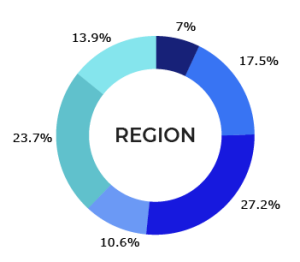
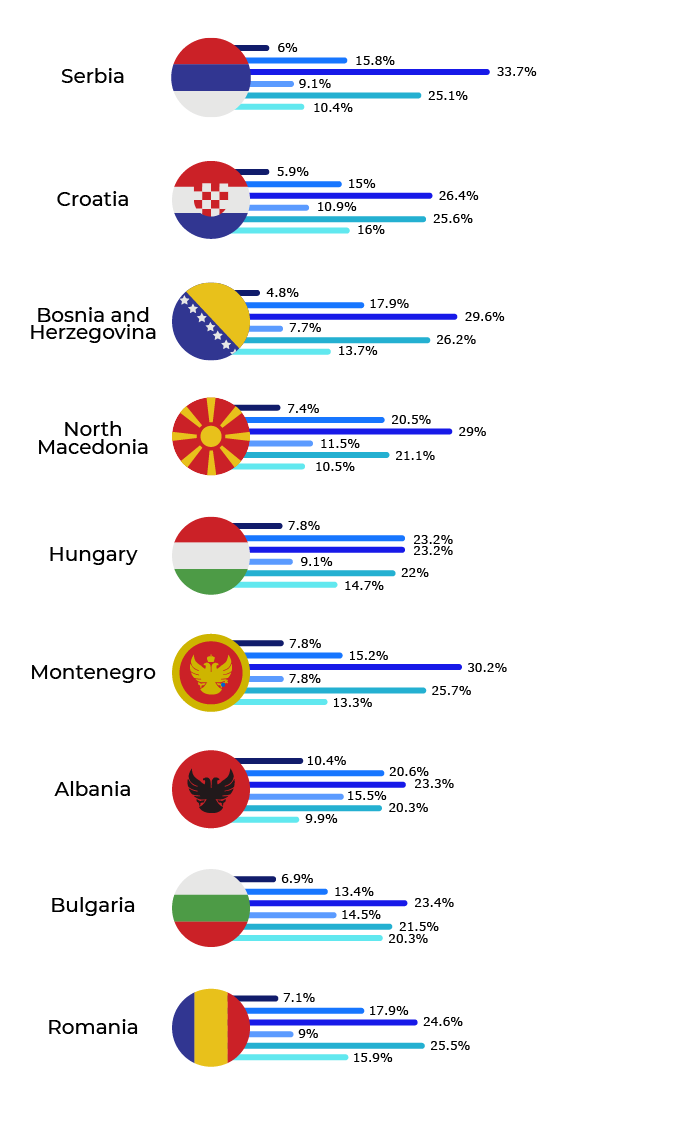
Expansion across all occupational groups. The latest measurement not only recorded an increase in the total number of gig workers but also growth in every occupational category. However, this expansion was far from evenly distributed. The most pronounced increase occurred in Data Entry and Administrative Services, where the workforce expanded by an impressive 36%, corresponding to nearly 2,500 new or reactivated workers. This suggests that digital labour platforms have become increasingly attractive to workers with low to medium skill levels, partly because they provide income opportunities that compare favourably with those available in many traditional domestic labour markets. By contrast, the slowest relative growth was observed in Creative and Multimedia Services, where employment increased by 8.8%. Nevertheless, this remains the largest occupational category in the regional gig economy, accounting for 27.2% of all gig workers. Given its already substantial size, even moderate percentage growth translated into the addition of 755 new workers. Approximately 1,000 or slightly more new workers entered each of the following occupational groups: Sales and Marketing, Software Development, and Writing and Translation. In comparison, Professional Services recorded a relatively modest increase of approximately 410 new workers, despite achieving a respectable growth rate of 12.5%.
Declining share of actively engaged workers. At the time of measurement, nearly 15,000 workers were actively engaged through Upwork. Measured by the number of workers employed through its platform, Upwork could therefore be considered one of the largest multinational employers operating in the region. Despite this impressive figure, labour market activity declined relative to the size of the overall workforce. Only 28.4% of gig workers were actively working at the time of observation, compared with 34.9% in the previous measurement—a decline of 6.5 percentage points. This reduction likely reflects the combined effects of national labour market developments, the growing substitution of routine gig work by artificial intelligence applications, and increasingly intense competition on global digital labour platforms.
Persistent cross-country differences in worker engagement. Significant differences in worker engagement continue to characterise the regional gig economy. Serbia and North Macedonia remain the countries with the highest levels of labour market activity. At the time of measurement, 37.1% and 37.0% of their respective gig workforces were actively engaged on projects. Although engagement declined compared with the previous reporting period, the reduction was relatively modest – 2.2 percentage points in Serbia and 3.3 percentage points in North Macedonia. The largest decline occurred in Albania, where only 20.9% of gig workers were active at the time of measurement, representing a decrease of 7.3 percentage points. Interestingly, Albania has consistently exhibited the greatest fluctuations in worker engagement over time, suggesting a comparatively lower degree of adaptability to changing conditions in the global digital labour market. Similarly, low engagement rates were observed in Bulgaria and Romania, where approximately 22.5% of gig workers were active. Given the relatively broad employment opportunities available both domestically and within the European Union, this may indicate that many workers in these countries use platform work primarily as a supplementary source of income rather than as their main occupation.
REGIONAL GIG WORKERS BY COUNTRY AND PROFESSION
Persistent cross-country differences in worker engagement. Significant differences in worker engagement continue to characterise the regional gig economy. Serbia and North Macedonia remain the countries with the highest levels of labour market activity. At the time of measurement, 37.1% and 37.0% of their respective gig workforces were actively engaged on projects. Although engagement declined compared with the previous reporting period, the reduction was relatively modest – 2.2 percentage points in Serbia and 3.3 percentage points in North Macedonia. The largest decline occurred in Albania, where only 20.9% of gig workers were active at the time of measurement, representing a decrease of 7.3 percentage points. Interestingly, Albania has consistently exhibited the greatest fluctuations in worker engagement over time, suggesting a comparatively lower degree of adaptability to changing conditions in the global digital labour market. Similarly, low engagement rates were observed in Bulgaria and Romania, where approximately 22.5% of gig workers were active. Given the relatively broad employment opportunities available both domestically and within the European Union, this may indicate that many workers in these countries use platform work primarily as a supplementary source of income rather than as their main occupation. Read more ...
Growth in Professional Services, with Exceptions. Montenegro and Romania recorded the strongest growth in the gig workforce in Professional Services. In Montenegro, the workforce expanded by more than one-half (55.6%), while in Romania it increased by almost one-third. The explanation for Montenegro lies primarily in the country’s relatively small gig workforce, which makes this occupational group particularly sensitive to relatively small changes in the number of gig workers. In Romania, by contrast, the strong growth appears to reflect an above-average recovery in labour supply, which also extended to this occupational group. The remaining countries recorded more moderate growth, ranging from 15.6% in Albania and 15.4% in Bulgaria, to single-digit growth in Hungary (7.5%) and North Macedonia (7.4%). The exceptions within this occupational group were Serbia, where the number of workers virtually stagnated (a slight contraction of 0.5%), and Bosnia and Herzegovina, where the contraction was particularly pronounced (9.5%). This also represents the largest single contraction recorded across all occupational groups and all countries in the region.
Strong and Widespread Growth in Data Entry and Administrative Services. The growth of the gig workforce in Data Entry and Administrative Services was particularly strong in Romania and Montenegro, where 37 and 28 out of every 100 workers, respectively, were new entrants. Substantial growth was also recorded in Bosnia and Herzegovina (51.5%), Croatia (49.1%), Hungary (43.4%), and Bulgaria (38.7%). Serbia experienced a somewhat more moderate inflow of gig workers in this occupational group (29.7%), while growth was considerably lower in the remaining two countries—Albania (13.7%) and North Macedonia (11.8%).
Sales and Marketing: Positive Growth Across All Countries, but at Different Rates. Sales and Marketing is the occupational group in which differences in growth dynamics across national labour markets were particularly evident, although growth remained positive in every country. Bulgaria recorded the strongest expansion, with the gig workforce increasing by more than one-half (51.3%). Together with Hungary, where the workforce expanded by one-quarter, and Romania, where it grew by one-fifth, Bulgaria forms a group of countries in which changes were particularly pronounced. By contrast, the smallest increase in the supply of gig workers in Sales and Marketing was recorded in Croatia and North Macedonia, where the gig workforce expanded by 3.8% and 6.9%, respectively.
EU Countries Recorded the Strongest Growth in Software Development. In Software Development, the strongest growth was recorded in EU countries. Indeed, only EU Member States experienced double-digit growth, ranging from 18.5% in Bulgaria, through 16.9% in Croatia, to 14.5% in both Hungary and Romania. This may indicate the influence of supranational, European-level factors which, combined with relatively higher labour costs, are shifting workers in the technology sector from traditional labour markets towards more profitable and/or more accessible—albeit considerably more volatile—global digital labour markets. By contrast, Albania and Montenegro recorded virtually no growth, while relatively low growth rates were observed in Serbia (2.4%) and Bosnia and Herzegovina (3.7%). North Macedonia recorded somewhat stronger growth, at 7.9%.
The Smallest Differences in Growth Dynamics Were Recorded in Creative and Multimedia Services. The smallest differences in growth dynamics were observed in Creative and Multimedia Services. Romania was the only country to record double-digit growth in this occupational group, with the gig workforce increasing by 11.9%, while the average growth rate across the remaining countries was a modest 3.9%. Moreover, Bulgaria recorded a slight contraction in the number of gig workers (1.3%), while Bosnia and Herzegovina experienced virtually no change.
The Largest Cross-Country Differences Were Recorded in Writing and Translation. The largest cross-country differences were recorded in Writing and Translation. This variation was primarily driven by the exceptional growth of the gig workforce in Bulgaria, where it increased by as much as 66.2%, and by the very strong, although considerably lower, growth recorded in Romania, where the workforce expanded by more than one-quarter (25.8%). In the remaining countries, growth remained in the single digits or was virtually stagnant (changes of less than 0.5%), with the exception of Montenegro, where the number of workers active in this occupational group declined.
National Responses to Global and Local Challenges. The absence of uniform trends, accompanied by relatively large variations in the growth of the gig workforce across countries and occupational groups, suggests that although the observed developments had a regional and global character—as reflected in the common direction of change—their intensity points to the country-specific nature of national gig labour markets and to differences in their flexibility and adaptability. Two broader aspects are particularly noteworthy. First, the similarity in the intensity of changes observed across all EU Member States, particularly in Software Development, strongly suggests that the technology sector in these countries has been exposed to more disruptive changes in traditional labour markets than in non-EU countries. This appears to have resulted in a relatively larger inflow of workers into the digital labour market in this occupational group. Second, a global pattern can be observed in Data Entry and Administrative Services, where all countries recorded a uniform, although varying in intensity, and in most cases substantial (double-digit) increase in the gig workforce. To some extent, this suggests that basic digital skills are sufficient to compete in the global digital labour market for less sophisticated jobs, while integration into traditional national labour markets appears to be more challenging.
Comparative advantages of the countries in certain professions
If the relative share of a particular occupational group in a given country is compared with the corresponding regional average, it is possible to identify the comparative advantages of individual countries. The highest relative share of an occupational group in a particular country, compared with the regional average, indicates that the country enjoys an absolute comparative advantage in the regional context. By contrast, any occupational group whose share in a country’s gig workforce exceeds the regional average indicates a relative comparative advantage in that occupational group.
Albania retained its comparative advantages in Professional Services and Sales and Marketing, while also gaining a new comparative advantage in Data Entry and Administrative Services. Bosnia and Herzegovina also recorded comparative advantages in three occupational groups: Data Entry and Administrative Services, Creative and Multimedia Services, and Software Development. At the same time, it lost the (modest) comparative advantage in Writing and Translation identified in the previous measurement. Montenegro, Croatia, and Hungary also belong to the group of countries with three comparative advantages. In Montenegro, the comparative advantage in Creative and Multimedia Services was maintained, while two new comparative advantages emerged in Professional Services and Writing and Translation. By contrast, no changes in comparative advantages were observed in Croatia or Hungary.
Romania and North Macedonia exhibit the most distinctive occupational structures in the region, each recording four comparative advantages. This indicates that the occupational composition of their digital labour markets deviates the most from the regional average. Romania retained its comparative advantages in Software Development and Writing and Translation. At the same time, unusually strong workforce growth in Professional Services and Data Entry and Administrative Services resulted in the emergence of two new comparative advantages in these occupational groups. By contrast, the relatively modest changes observed in North Macedonia, which were broadly consistent with the prevailing regional trends, resulted in no changes to its comparative advantages.
Serbia and Bulgaria have the occupational structures that are most similar to the regional average. Serbia’s comparative advantages are concentrated in the two most technologically advanced occupational groups—Creative and Multimedia Services and Software Development. By contrast, the distinctive feature of Bulgaria’s gig labour market lies in the relatively high shares of gig workers in Sales and Marketing and Writing and Translation.

REGIONAL GIG WORKERS BY GENDER
The latest measurement indicates the continued gradual convergence of the gender composition of the digital labour market. Owing to the somewhat stronger inflow of female gig workers (16%) compared with male gig workers (13%), the share of women in the total gig workforce increased by 2.7 percentage points, reaching almost 40%.
The gig workforce expanded for both genders across all countries in the region, although the intensity of growth varied. At the same time, the occupational distribution by gender became more balanced.
Female gig workers outnumber their male counterparts in three of the six occupational groups analysed—Professional Services, Data Entry and Administrative Services, and Writing and Translation. By contrast, male gig workers continue to predominate in Creative and Multimedia Services, Sales and Marketing, and especially Software Development, which remains the occupational group with the most pronounced gender imbalance. Read more ...
Modest Increase in the Share of Female Gig Workers. The latest measurement resulted in a slight narrowing of the gender gap, with the share of female gig workers in the total gig workforce reaching almost 40%. Specifically, the share of women increased from 39.3% to 39.9%, continuing the long-term trend towards a more balanced gender composition of the digital labour market. This trend is driven by the stronger growth of the female gig workforce, which expanded by 16%, compared with a more moderate increase of 13% among male gig workers. In absolute terms, nearly 2,900 female gig workers entered the digital labour market during the reporting period, while the number of new male gig workers exceeded 3,600. This development not only reflects the continued convergence of the gender composition of the digital labour market in Southeast Europe, but also indicates a further move towards the gender balance observed in the world’s most egalitarian digital labour markets, such as North America, and towards the current global average, where women account for approximately 42% of the gig workforce.
Growth Across Both Genders in All Countries. The gig workforce expanded among both women and men in every country in the region. In most countries, however, the growth of the female gig workforce was more pronounced. The exceptions were Albania and Bulgaria. In Albania, the number of female gig workers increased slightly more slowly than that of male gig workers (7.5% compared with 8.4%). In Bulgaria, the difference was considerably more pronounced, with the number of new male gig workers being three times higher than the number of new female gig workers. By contrast, in Bosnia and Herzegovina, Montenegro, Hungary, and Romania, not only did the female gig workforce grow at a faster rate than the male gig workforce, but the absolute increase in the number of female gig workers also exceeded that of their male counterparts. The most pronounced convergence in the gender composition of the gig workforce was recorded in Bosnia and Herzegovina, where the number of new female gig workers was 25.8% higher than the number of new male gig workers.
Growth Accompanied by Gender- and Occupation-Specific Variation. The expansion of the gig workforce across all occupational groups was accompanied by growth among both female and male gig workers. However, the defining feature of the latest measurement is that this growth was uneven, a pattern observed across all countries. Moreover, a larger number of occupational groups recorded stronger growth among female than among male gig workers. Specifically, across the nine countries covered by the study, female gig workers recorded double-digit growth in 33 cases, compared with 27 cases for male gig workers. Among male gig workers, the highest growth rate was recorded in Data Entry and Administrative Services in Montenegro (94.2%), while among female gig workers the highest increase was observed in the same occupational group in Romania (73.5%). For male gig workers, the workforce in Data Entry and Administrative Services expanded by more than 50% in Romania (52.9%) and Bulgaria (50.4%). Among female gig workers, growth above 50% in this occupational group was recorded in Bosnia and Herzegovina (56.8%) and Croatia (51.4%). Growth of comparable magnitude in other occupational groups was observed only in isolated cases and in different countries. Among male gig workers, this was the case in Professional Services in Montenegro (73.6%), Sales and Marketing in Bulgaria (64.7%), and Writing and Translation in Bulgaria (92.3%). Among female gig workers, apart from the above-mentioned cases in Romania, Bosnia and Herzegovina, and Croatia in Data Entry and Administrative Services, the only similarly pronounced increase was recorded in Software Development in Croatia, where the female gig workforce expanded by 70.2%. These findings suggest three broader conclusions. First, global factors, together with potentially similar developments across national digital labour markets, appear to have generated common trends throughout the region by attracting a large number of new gig workers, particularly into Data Entry and Administrative Services. Second, although rapid growth was more widespread and more frequent among female gig workers, greater variation in growth rates was observed among male gig workers. This may, at least in part, reflect men’s greater exposure to developments in traditional labour markets, such as layoffs in the technology sector, which subsequently spill over into the digital labour market. Third, substantial cross-country variation in labour market developments remains evident. This variation is primarily explained by differences in the occupational composition of national labour markets, but also by a range of local factors that lie outside the influence of the platform economy itself.
Local Exceptions to Regional Growth Dynamics. The dominant trend across both genders was an increase in the number of gig workers, with only a few exceptions. Among male gig workers, Montenegro recorded a decline in the gig workforce in Software Development (4.1%) and Writing and Translation (5.9%), while Creative and Multimedia Services remained virtually unchanged. These developments are largely attributable to the relatively small size of the labour supply in the Montenegrin digital labour market, which makes it particularly sensitive to relatively small fluctuations in the number of gig workers. The observed changes therefore appear to reflect the specific characteristics of labour supply in Montenegro. A similar pattern was observed in Bosnia and Herzegovina, where the number of male gig workers declined slightly in Professional Services (3.3%) and Creative and Multimedia Services (4.4%). In this case as well, the trends observed in these two occupational groups appear to be driven by country-specific factors, as comparable developments were not recorded in any other country. In Hungary, the exception to the prevailing regional trend was observed in Writing and Translation, where the gig workforce contracted by a relatively modest 2.2%. This may also be explained by the relatively large number of active gig workers already present in this occupational group (12.5% of the country’s total gig workforce), making fluctuations—potentially driven by stronger competition—more likely. Among female gig workers, somewhat greater variation was observed across occupational groups. However, unlike the patterns observed among men, these fluctuations showed no clear concentration either by country or by occupation, suggesting that they were driven primarily by local factors and gender-specific characteristics—for example, the greater propensity of female gig workers to use platform work as a supplementary source of income. The only substantial contraction among female gig workers was recorded in Professional Services in Bosnia and Herzegovina (15.5%). This decline is largely explained by the relatively small size of the workforce in this occupational group, meaning that the departure of only 15 female gig workers resulted in a large relative decrease. In addition, more pronounced contractions (exceeding 5%) were recorded in Serbia, also in Professional Services (7.1%), in Bulgaria, in Creative and Multimedia Services (6.8%), and in Albania, in Writing and Translation (5.4%). In the remaining five cases, contractions were considerably smaller.
HOURLY RATES, IN US$
Average requested hourly rates in the region continued to increase, with growth accelerating in the latest measurement. The average requested hourly rate rose by 4.4%. However, growth varied across countries. Particularly strong increases were recorded in Albania (18.3%), while robust growth was also observed in Croatia (8.0%) and Hungary (6.9%). As a result, Croatia retained by far the highest average requested hourly rate in the region, at US$28.9 per hour, which is 49.2% higher than in North Macedonia. North Macedonia remains the only country in the region where the average requested hourly rate is still below US$20 per hour (US$19.4).
The latest measurement also recorded a continued increase in requested hourly rates for both female and male gig workers. However, growth was somewhat stronger among female gig workers (6.1%) than among male gig workers (3.6%), resulting in a slight narrowing of the gender pay gap. On average, female gig workers now request hourly rates equivalent to 83.3% of those requested by their male counterparts. National gig labour markets, however, remain highly heterogeneous in this respect. Albania is the most gender-equal market, where female gig workers request, on average, 92.3% of the hourly rates requested by male gig workers. By contrast, the EU Member States Hungary and Croatia exhibit pronounced gender disparities, with female gig workers requesting, on average, only three-quarters of the hourly rates requested by their male counterparts.Read more ...
Growth in Requested Hourly Rates Accelerated Slightly. The growth of average requested hourly rates accelerated slightly in the latest measurement. Across the region, average requested hourly rates increased by 4.4%, more than doubling the growth rate recorded in the previous measurement (2.0%). However, growth varied considerably across individual labour markets. By far the largest increase in the average requested hourly rate was recorded in Albania, where it rose by 18.3%. This increase was substantial not only in relative but also in absolute terms: over the previous six months, the average requested hourly rate in Albania increased by US$3.5. As a result, Albania is no longer the country with the lowest-priced labour in the region, and its average requested hourly rate has moved closer to that of Serbia. More pronounced increases in average requested hourly rates were also recorded in Montenegro (8.0%) and Croatia (6.9%), while Bosnia and Herzegovina and Bulgaria experienced more moderate growth of approximately 3%. A modest increase was recorded in Romania (1.3%), suggesting that income-related factors are unlikely to explain the substantial growth of the gig workforce observed in that country. In the remaining countries, developments were closer to stagnation, with only minimal changes ranging from 0.8% in North Macedonia to 0.2% in both Serbia and Montenegro.
Croatia Continues to Record the Highest Average Requested Hourly Rate. Differences in the growth of requested hourly rates across individual countries resulted in some changes in the relative ranking of national labour markets, although these changes were not substantial. As in previous measurements, Croatia continued to record the highest average requested hourly rate, while North Macedonia, largely due to the weak growth of requested hourly rates in recent periods, remained at the bottom of the regional ranking. Moreover, it remained the only country where the average requested hourly rate was still below US$20 per hour. In addition, a clear distinction between EU and non-EU countries has now emerged without exception. The four countries with the highest average requested hourly rates are all EU Member States, suggesting that part of the observed differences may reflect an EU membership premium. Regional disparities have also widened to some extent, particularly when comparing workers in the highest- and lowest-paying countries. While in the previous measurement the average requested hourly rate in Croatia was 39.3% higher than that in North Macedonia, this difference increased to 49.2% in the latest measurement. This illustrates one of the fundamental differences between the digital and traditional labour markets. Relative positions can change rapidly over short periods in the digital labour market, whereas relative differences in traditional labour markets tend to be considerably more stable.
Growth Was Observed Almost Everywhere. An increase in average requested hourly rates was recorded for both female and male gig workers across almost all countries. The only exception was Montenegro, where the average requested hourly rate among male gig workers declined by 4.9%. At the regional level, the average requested hourly rate of female gig workers increased by 6.1%, compared with 3.6% for male gig workers. Differences were also evident in the dynamics of growth by gender. In most countries, the average requested hourly rate of female gig workers increased at a faster pace than that of their male counterparts. The exceptions were Bulgaria and Croatia, where the growth rate for male gig workers exceeded that for female gig workers by 0.3 and 0.5 percentage points, respectively, as well as Hungary, where the difference was more pronounced, amounting to 4.1 percentage points. By contrast, in most countries where female gig workers recorded faster growth, the difference was of a comparable magnitude. The main exceptions were Montenegro, where the growth rate of female gig workers exceeded that of male gig workers by 15.7 percentage points, Albania (12.8 percentage points), and, to a considerably lesser extent, Bosnia and Herzegovina (5.8 percentage points). In all other countries, the convergence in requested hourly rates between female and male gig workers was considerably less pronounced.
A Slight Narrowing of the Gender Gap in Requested Hourly Rates. Despite these developments, gender differences in requested hourly rates remained substantial across the region. On average, female gig workers requested US$4.4 less per hour than their male counterparts, which translates into a difference of more than US$750 per month for full-time work. Nevertheless, even with this gap, the region remains among the most gender-equal digital labour markets globally. The average requested hourly rate of female gig workers has increased to 83.3% of that requested by male gig workers.
A Widening Gender Gap in Requested Hourly Rates, with Some Exceptions. The combination of relatively modest changes in requested hourly rates and somewhat divergent trends between female and male gig workers resulted in varying developments in the gender gap across individual countries. These developments made Albania the most gender-equal market in the region, where female gig workers request, on average, 92.6% of the hourly rates requested by their male counterparts. By contrast, a substantial gender gap was observed in Hungary, where it widened further compared with the previous measurement. There, the average requested hourly rate of female gig workers amounted to only 73.3% of that requested by male gig workers. Similar findings were recorded in Croatia, where female gig workers requested, on average, only 76.7% of the hourly rates requested by their male counterparts.
_____________________________________________________
Recommended citation: Anđelković, B., Jakobi, T., Ivanović, V., Kalinić, Z. & Radonjić, Lj. (2026a). Gigmetar Region, May 2026, Re:People – Centre for society and technology, http://gigmetar.repeople.rs/en/en-region-2026-1/
PREVIOUS REPORTS












HOW GIGMETAR WORKS
GigmetarTM is the first instrument that describes the geography of digital work in Serbia and the region in terms of gender, income, and most common occupations. It is a result of the efforts made by RE:PEOPLE (former Public Policy Research Centre) to shed more light on the work on online platforms.

ABOUT US
Re:People – Centre for society and technology is a team of innovative researchers and digital enthusiasts investigating the future of work and development of the digital economy in Serbia and South-East Europe.
Contact: gigmetar@repeople.rs